


Smart home charging
Solenso solar EV charger
Meet the Solenso EV+ charger, built to charge your electric vehicle at home in step with your own solar production. Single-phase 7 kW or three-phase 11 kW, it is controlled from the app, works with your energy management system and protects both the installation and the people around it.

7 Or 11 kW Charging

Solar Production First

Built-In DC Protection

Tethered Type 2 Cable

Control From The App

Dynamic Load Balancing
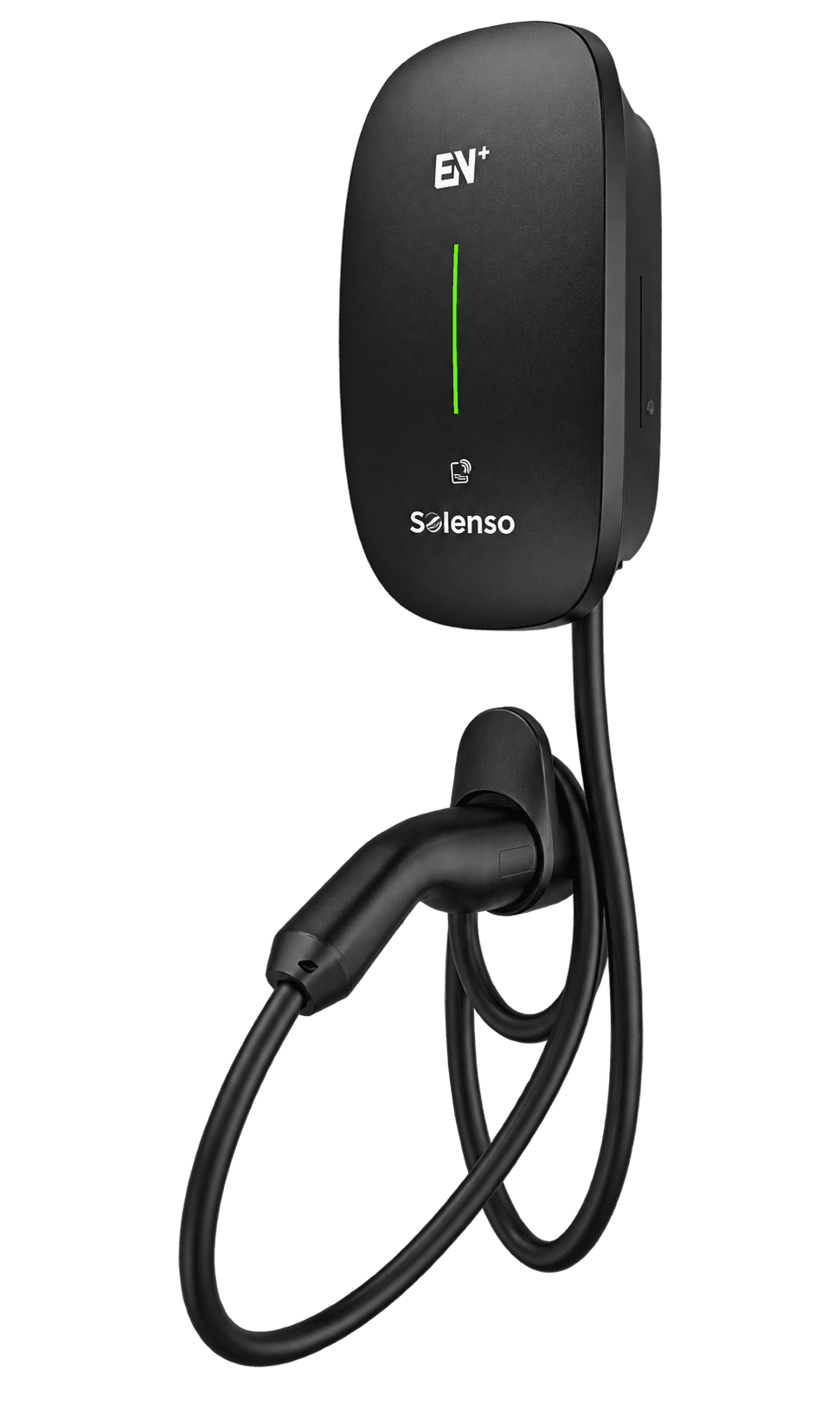
EV charger: EV+ 7 kW single-phase
For a 230 V, 32 A supply
Charges at up to 7 kW on a single-phase 230 V supply
Tethered Type 2 cable, wall mounted or pole mounted as an option
30 mA type A and 6 mA DC residual current protection built in
Start by plugging in, with an RFID card or from the app
IP65 enclosure and IK10 impact resistance, from -30 to +50 °C
EV charger: EV+ 11 kW three-phase
For a 400 V, 16 A supply
Charges at up to 11 kW on a three-phase 400 V supply
Dynamic load balancing with the rest of the home
Charges from your solar production, with no draw on the grid
Wi-Fi, Ethernet and Bluetooth as standard, 4G as an option
OCPP 1.6 JSON and 2.0.1-J, RS485 Modbus RTU and TCP for your EMS
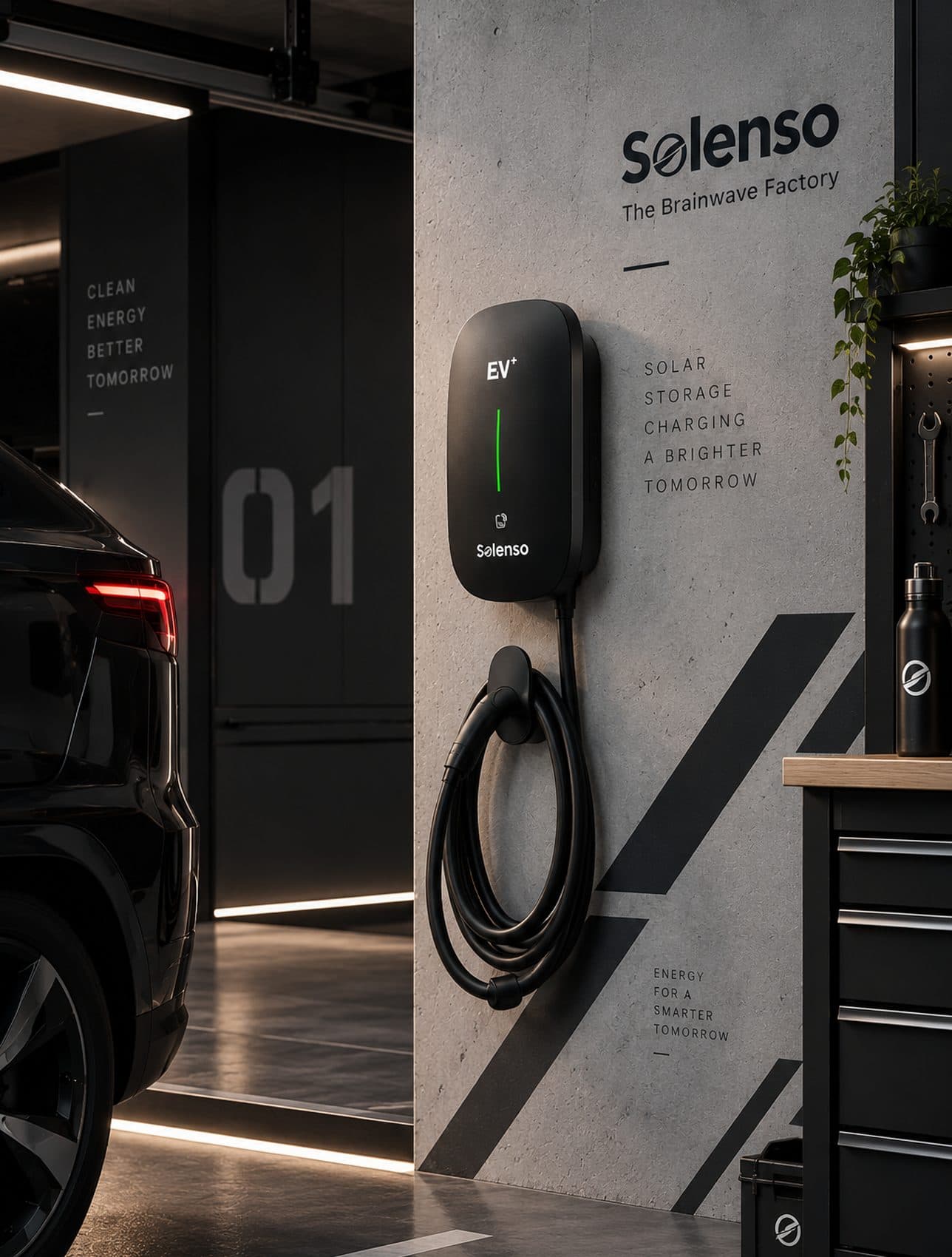
 PV compatible
EV charger for electric vehicles
Choosing a home EV charger
An EV charger, or wallbox, is chosen on its supply first. Single-phase, the EV+ delivers 7 kW at 230 V and 32 A, which puts back around 40 km of range for every hour of charging. Three-phase, it rises to 11 kW at 400 V and 16 A and lifts that figure to around 65 km. The Type 2 cable stays tethered to the unit, so there is nothing to lift out of the boot, and the IP65 enclosure with IK10 impact resistance suits a closed garage as readily as an outside wall or a pole. The 30 mA type A and 6 mA DC residual current protection is built in, which saves adding a dedicated device to the consumer unit.
The real gain lies in where the electricity comes from. Connected to a photovoltaic installation, the charger matches its current to the power being produced and charges from the surplus rather than the grid. Dynamic load balancing shares the available power between the vehicle and the rest of the home so your supply limit is never exceeded, and off-peak scheduling takes over when the sun is missing. Charging starts by plugging in, with an RFID card or from the app, and support for OCPP 2.0.1-J and Modbus lets the charger join an energy management system that is already in place.
A Solenso EV charger means a vehicle charged by your own solar production, managed from the app that already follows your panels and your battery.